
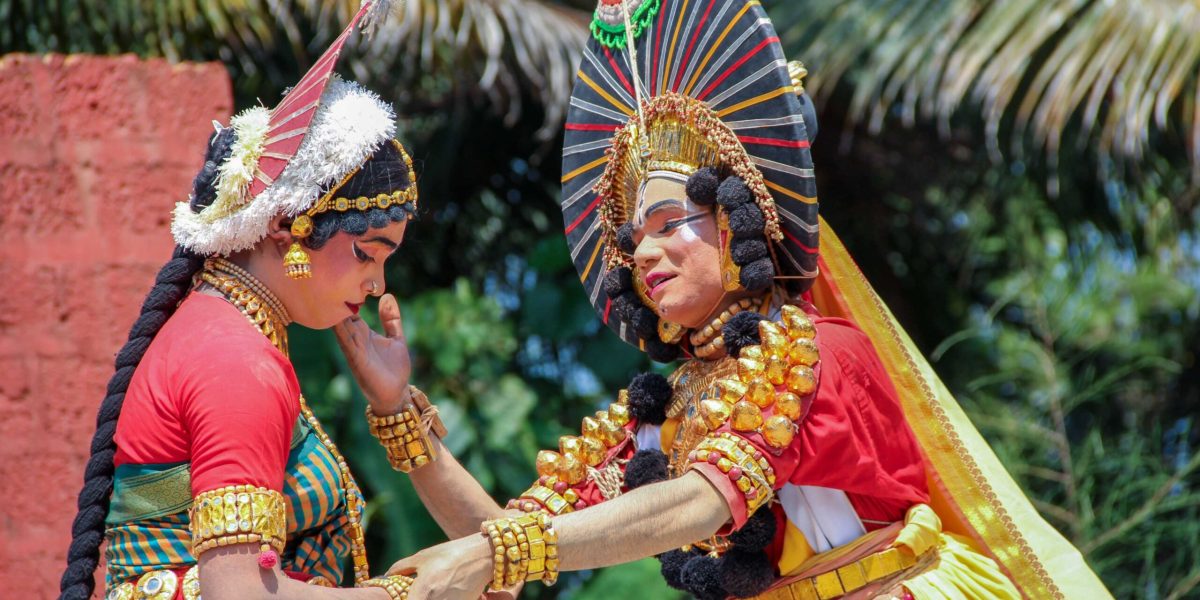
Yakshagana is a vibrant traditional theatre form that blends dance, music, dialogues, and elaborate costumes to bring mythological stories to life. Deeply rooted in the cultural landscape of Uttara Kannada, it is performed through the night and captivates audiences with its powerful storytelling and rhythmic intensity. The performers, adorned in striking makeup and headgear, enact episodes from epics like the Ramayana and Mahabharata, accompanied by live music and dramatic narration.
More than just a performance, Yakshagana is a living expression of Uttara Kannada’s spiritual and artistic heritage.
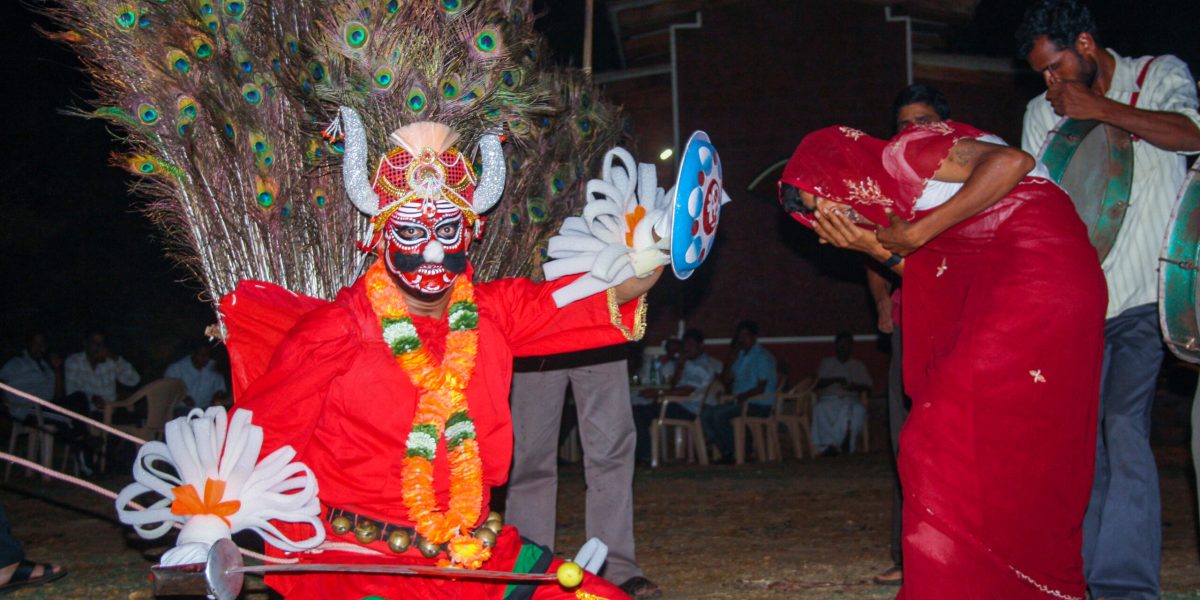
Bedara Vesha is a powerful and energetic folk performance traditionally observed during the nights of Maha Shivaratri, especially in parts of Sirsi and surrounding regions in Uttara Kannada. Performers, dressed as fierce hunters with painted bodies, garlands, and dramatic headgear, dance through the streets enacting scenes inspired by tribal warrior traditions and devotion to Lord Shiva.
The ritual, often accompanied by drumming and chanting, symbolizes courage, spiritual power, and the cultural vibrance of the region. Bedara Vesha is not just a spectacle — it’s a deeply rooted tradition that stirs devotion and community spirit.
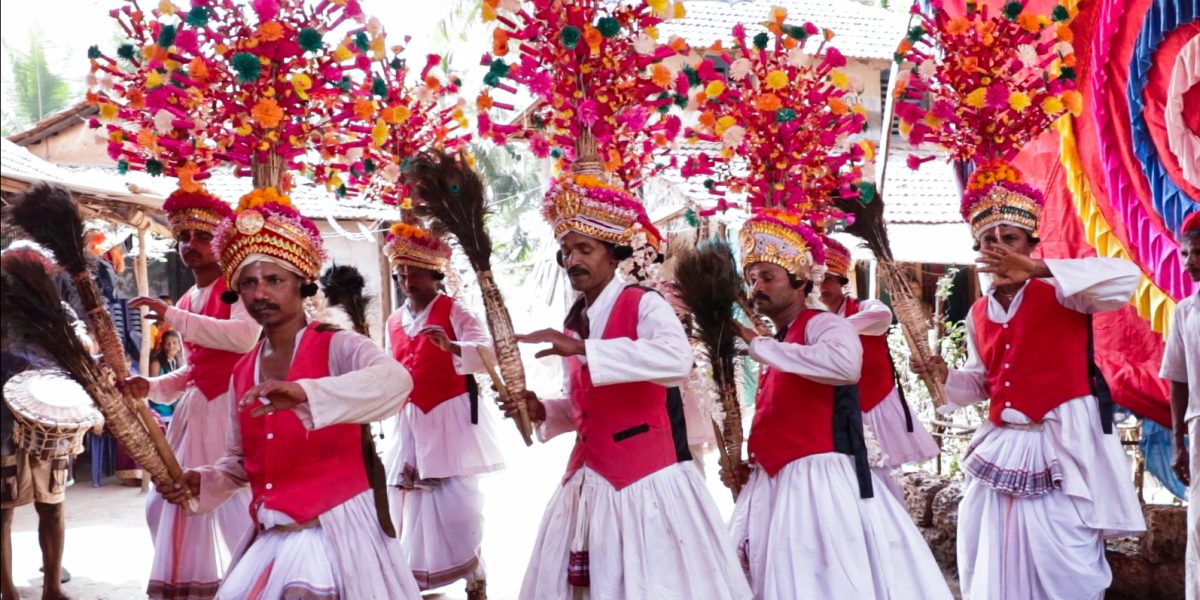
Halakki Suggi Kunitha is a harvest dance performed by the Halakki Vokkaliga community, a tribal group native to coastal and forest regions of Uttara Kannada. It is usually seen during the Suggi (harvest) season, expressing gratitude for a bountiful crop.
Women in traditional attire with elaborate bead jewelry and headgear dance in graceful lines, clapping and swaying to folk songs sung in their dialect. The performance blends celebration, ritual, and social unity, preserving the cultural identity of the Halakki people.